Buyer's guide · Home panels
Red Light Therapy Panels (2026): Top 10 Compared, and How to Choose Without Overpaying
Disclosure: there are no affiliate links on this page today. If we add partner links later, we may earn a commission when you buy through them, at no extra cost to you, and we'll label those links clearly. Nobody paid for placement, and we haven't received free devices.
Short answer: don't pay for watts, LED counts or extra modes. Pay for usable light at the distance you'll actually stand. Compare panels on dollars per mW/cm² at 6 inches (using an independent measurement where one exists), within the same size class. Look for red (about 630–660 nm) plus near-infrared (about 810–850 nm), a size that covers the area you care about, clear answers on EMF and flicker, and at least a 2-year warranty with a real return window. A “1000W” label tells you almost nothing about the light that reaches you.
Why panels are easy to overpay for
Home panels are the priciest thing most people buy in red light therapy, often $600 to $2,000 or more, and the category with the most confusing marketing: big wattage numbers, LED counts in the hundreds, seven-plus wavelengths. None of those numbers is your dose.
Your dose is power density × time. We cover the formula, the skin and deep-tissue bands, and why more minutes isn't better in Red light therapy dosing: the Goldilocks rule. For a panel, more usable mW/cm² at your distance just gets you to your target dose faster; it doesn't make the dose better. So the question isn't “which panel is strongest?” It's “how much am I paying for each unit of usable light, at a size that fits my goal?”

Jump to the Top 10 comparison table →
1. Dollars per usable mW/cm² at 6 inches
This is the single most useful number for comparing panels, and almost nobody prints it. You work it out yourself:
Three rules make it honest:
- Use measured irradiance, not the box. An independent spectrometer reading beats a brand claim. Third-party notes we rely on say cheap solar-power meters can read 2–3× high on LED panels, so a figure measured with one is optimistic.
- Use the same distance. 6 inches (about 15 cm) is the common reference. A figure taken at the surface of the panel, or with no distance stated, isn't comparable.
- Compare like with like. A full-body panel costs more than a half-body panel with the same irradiance because it lights a bigger area. Compare tabletop with tabletop and full-body with full-body.
Worked examples from attributed numbers
These are calculations on other people's numbers, not our measurements. Prices are list prices from our notes (not discounted prices) and are probably out of date.
| Panel | Size class | Irradiance used (source) | Price used (source) | ≈ $ per mW/cm² |
|---|---|---|---|---|
| PlatinumLED BIOMAX 900 | Half-body | 90 mW/cm² (LTI-reported) | $1,299 / $1,499 / $1,995 (sources disagree, see below) | ~$14 / ~$17 / ~$22 |
| Block Blue Light Mega 4.0 | Half-body | ~77 mW/cm² (LTI-reported) | $599 (internal catalog, unverified) | ~$8 |
| Joovv Solo 3.0 | Half-body | ~70 (internal catalog) to “~100+” at an unspecified distance (research overview) | $1,295 (internal catalog, unverified) | ~$13–19 |
| Block Blue Light Elite XL | Full-body | ~77 mW/cm² (LTI-reported) | $3,500 list (LTI) vs $1,099 (internal catalog) | ~$45 vs ~$14 |
| Rojo Refine 3600 | Full-body | 72 mW/cm² (LTI-reported) | $3,700 list (LTI) | ~$51 |
The table mostly shows how much the answer moves with the inputs. The BIOMAX 900 lands anywhere from about $14 to $22 per mW/cm² depending on which price you believe, and the Elite XL swings by more than 3× between sources. That's why we don't rank panels here: until prices and irradiance are re-checked on the same day, at the same distance, the math is a method, not a verdict.
What about Joovv?
Joovv comes up in almost every panel search, so it's worth being precise. Light Therapy Insiders scored Joovv 40.5/100 in its comparison and called it overpriced for the output delivered. That's their judgement. Our own notes don't give us a Joovv irradiance at 6 inches from an independent source: one says “about 100 mW/cm²” with no distance, another lists 70. Run the math on those numbers and the Solo 3.0 comes out around $13–19 per mW/cm², which overlaps the BIOMAX 900 range above. So on the numbers we have, we can't confirm or rule out the “overpriced” verdict. If you're considering Joovv, ask for its measured irradiance at 6 inches and compare it with the same figure for the alternatives. A $-per-mW figure also ignores features some buyers value, such as modular linking and app control. Our older notes list Joovv models (“Max 3.0”, “Tower”) that may not exist, so check the current line-up.
2. Input watts vs real light output
“1000W”, “1500W”, “2000W” are the most misleading numbers on panel listings. Reviewer notes put it bluntly: these figures usually describe input, not output. On many budget panels they're not even the real input; they're the number of LEDs multiplied by the LED's nominal rating. The panel's actual draw from the wall is often far lower, and only part of that electricity leaves as light. The rest becomes heat.
What to do instead:
- Find the actual power draw (“true watts”) in the spec sheet: a sanity check, not a dose number.
- Find irradiance in mW/cm² at a stated distance, with the instrument named.
- Be wary of power claims far above the pack. Our notes record one budget brand claiming over 250 mW/cm², with independent testing reportedly showing less.
Reviewer notes call about 70–100 mW/cm² at 6 inches a strong panel. That's a third-party benchmark; a lower-power panel can still dose you properly with longer sessions.
3. Wavelength bands: what you need and what's a bonus
| Band | Typical wavelengths | What it's for | Buying note |
|---|---|---|---|
| Red | 630–660 nm | Surface: skin-level goals | Well researched; essentially every serious panel has it |
| Near-infrared | 810–850 nm | Deeper: muscle, joints | Also standard; invisible, so protect your eyes |
| Longer NIR | ~1060 nm | Deeper tissue | Newer research; nice to have, not essential |
| Extras | e.g. ~480 nm | Varies | Ask how much of the output it is; “bonus” bands with tiny output add little |
A plain two-band panel (660 + 850 nm) covers the most-studied ground, and many budget and mid-range brands use exactly that. Multi-band panels aren't automatically better: what matters is how much power each band delivers, so a spectral breakdown (output per wavelength) beats a count of wavelengths. More on picking a band for your goal: skin vs deep tissue in our dosing guide.
4. Size and coverage
Bigger panels aren't stronger; they just cover more of you at once. And if your goal is one small area, a panel may not be the right type at all:

Within panels, think in three classes:
- Tabletop / small (often a few hundred dollars): one area at a time, such as your face and neck or one knee. Fine if your goal is local, and you can move it between areas.
- Half-body (often around $500–1,500 in our notes): torso or legs in one session. The most common choice for general use.
- Full-body (often $1,500–3,700 in our notes): head to knee or toe at once. Saves time, costs the most, needs floor space and a stand or door mount.
Coverage and distance trade off. Standing further back lights more of you, but irradiance drops quickly (roughly a quarter at double the distance for a small source), so sessions get longer, and a panel's 6-inch number no longer applies.

Modular panels that link together let you start small and add later; check the linking hardware is included and future panels will be compatible.
5. EMF and flicker: questions to ask
We haven't measured either on any device, so here's what to ask rather than what to believe.
EMF. Many panels are marketed as “zero EMF” or “low EMF”. Third-party notes say good panels read about 0.0 µT at 4–6 inches. Ask the brand: which meter was used, at what distance, and was it measuring magnetic fields, electric fields or both? If it matters to you, a consumer EMF meter at your usual distance is the only way to know for your unit.
Flicker. LED drivers can flicker faster than most people notice. Our research overview flags that some panels have slight flicker that could affect a very sensitive person, for example someone with light-triggered seizures. Ask whether the driver is flicker-free in continuous mode, and treat any pulse mode as a separate question: pulsing is visible flashing by design. If you have photosensitive epilepsy, talk to your neurologist first and avoid pulsed modes.
6. Warranty, returns and the company behind it
A panel is a multi-year purchase, so the company matters as much as the specs. From our notes (re-check, they change):
- PlatinumLED: 3-year warranty and 60-day trial (research overview).
- Mito Red Light: 3-year warranty on MitoPRO lines (notes).
- Joovv: 2-year warranty in our research overview, but 3 years for some models in our catalog. Sources disagree; check Joovv's site.
- Hooga: 2 years on panels (catalog). Block Blue Light: 2 years on Mega 4.0, 3 on Elite XL (catalog).
Reviewer notes suggest a 2-year minimum, phone support, a company that's been around for at least 2–3 years, and buying from a seller in your own country so local consumer law protects you.
Watch regulatory wording too. Our notes call some panels “FDA Class II”; a device class is neither an approval nor a 510(k) clearance for a specific use. If a brand claims clearance, look up the exact model in the FDA 510(k) database.
Top 10 red light panels compared
The ten panels that come up most in buyer searches and our notes, side by side. The order is not a Red Light Guide ranking. Rows 1–5 follow a third-party reviewer's 2024 wall-panel comparison order (Light Therapy Insiders); rows 6–8 are that reviewer's full-body picks; 9–10 are popular alternatives. Compare within a size class: a full-body panel costs more because it covers more of you, not because its light is better.
| # | Photo | Panel | Size class | Third-party note | Wavelengths (nm) | Irradiance at 6 in | Minutes to 30 J/cm²* | Warranty | Price used → ≈ $ per mW/cm² |
|---|---|---|---|---|---|---|---|---|---|
| 1 | 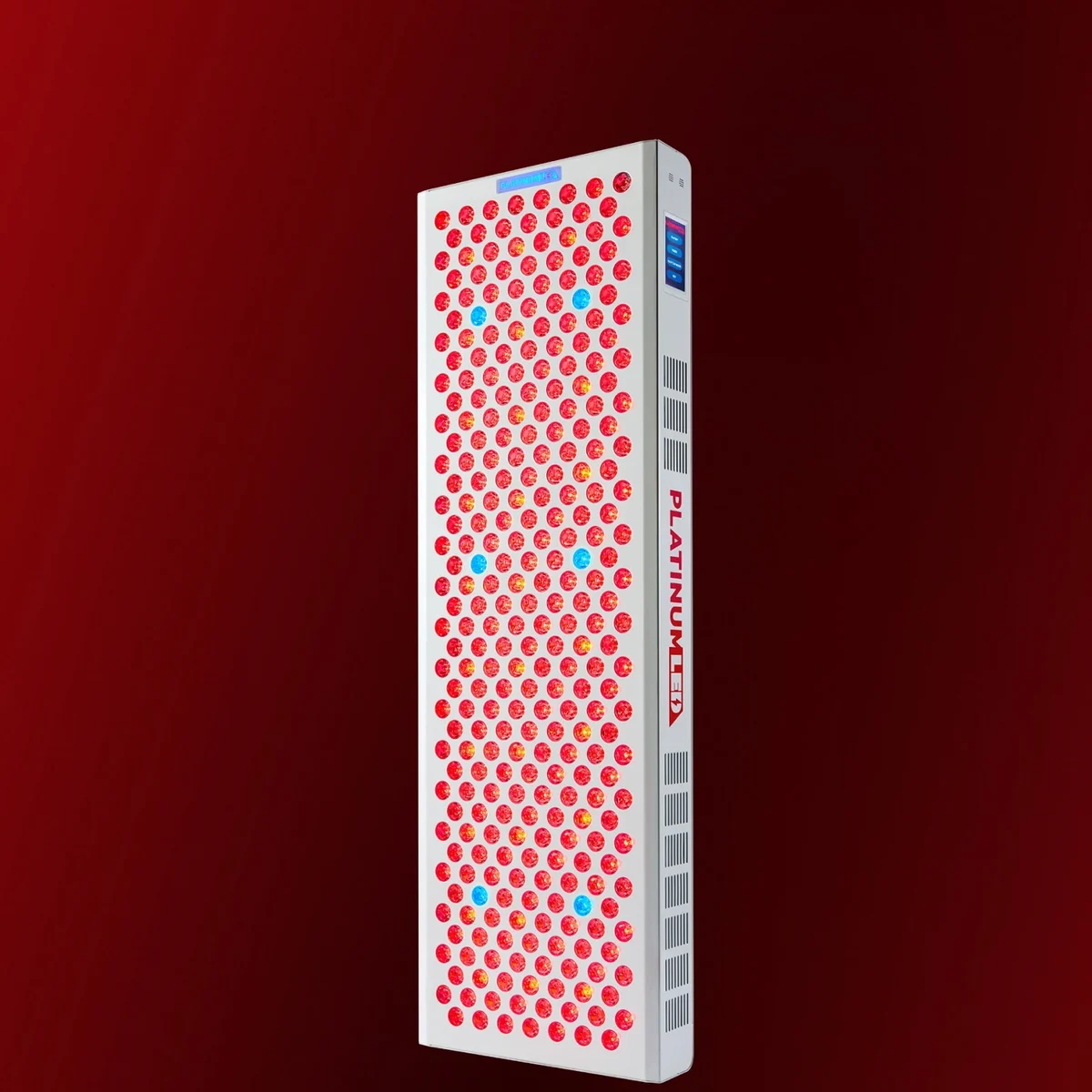 | PlatinumLED BIOMAX 900 | Half-body | LTI 2024 #1, 93.5/100 LTI-reported | 480, 630, 660, 810, 830, 850, 1060 6 vs 7 conflict | 90 mW/cm² LTI-reported | ~5.6 | 3 yr | $1,299–1,995 (sources disagree) → ~$14–22 |
| 2 | 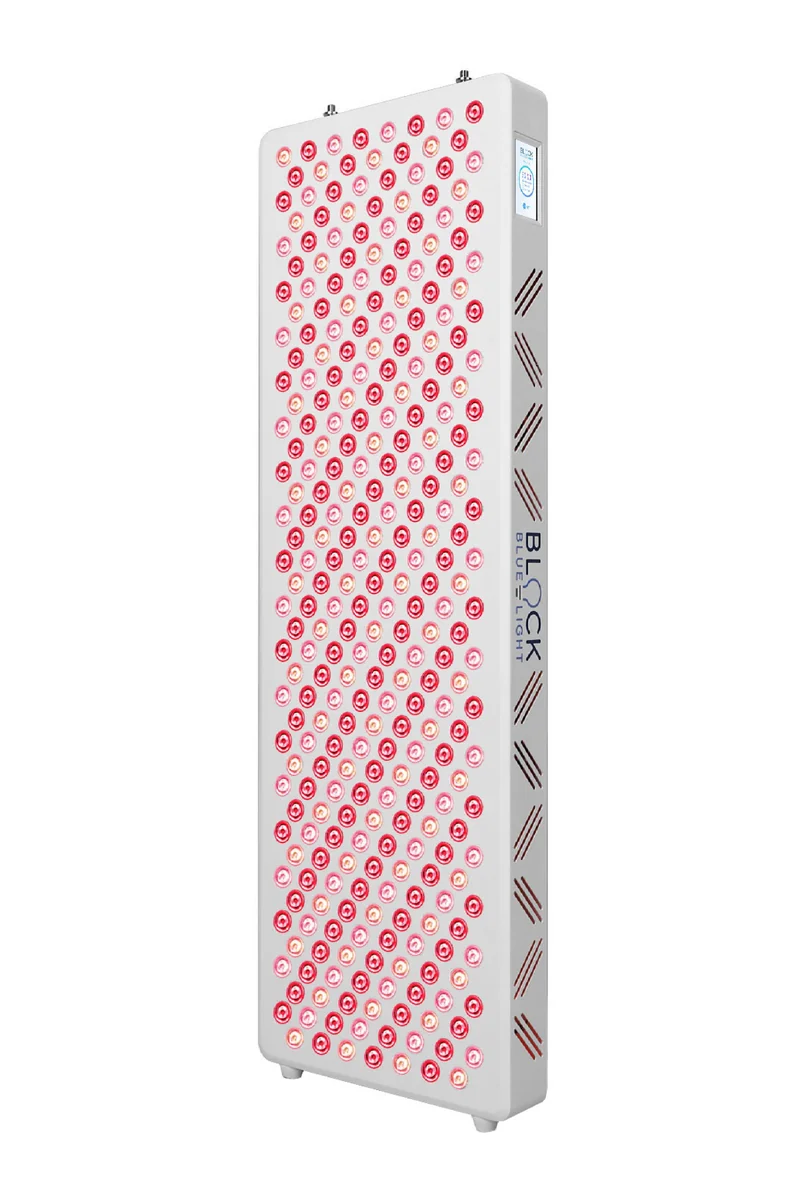 | Block Blue Light Mega 4.0 photo: current MEGA | Half-body | LTI #2, 91/100; 300 LEDs LTI-reported | 630, 660, 810, 830, 850 catalog | ~77 mW/cm² LTI-reported | ~6.5 | 2 yr catalog | $599 catalog → ~$8 |
| 3 | 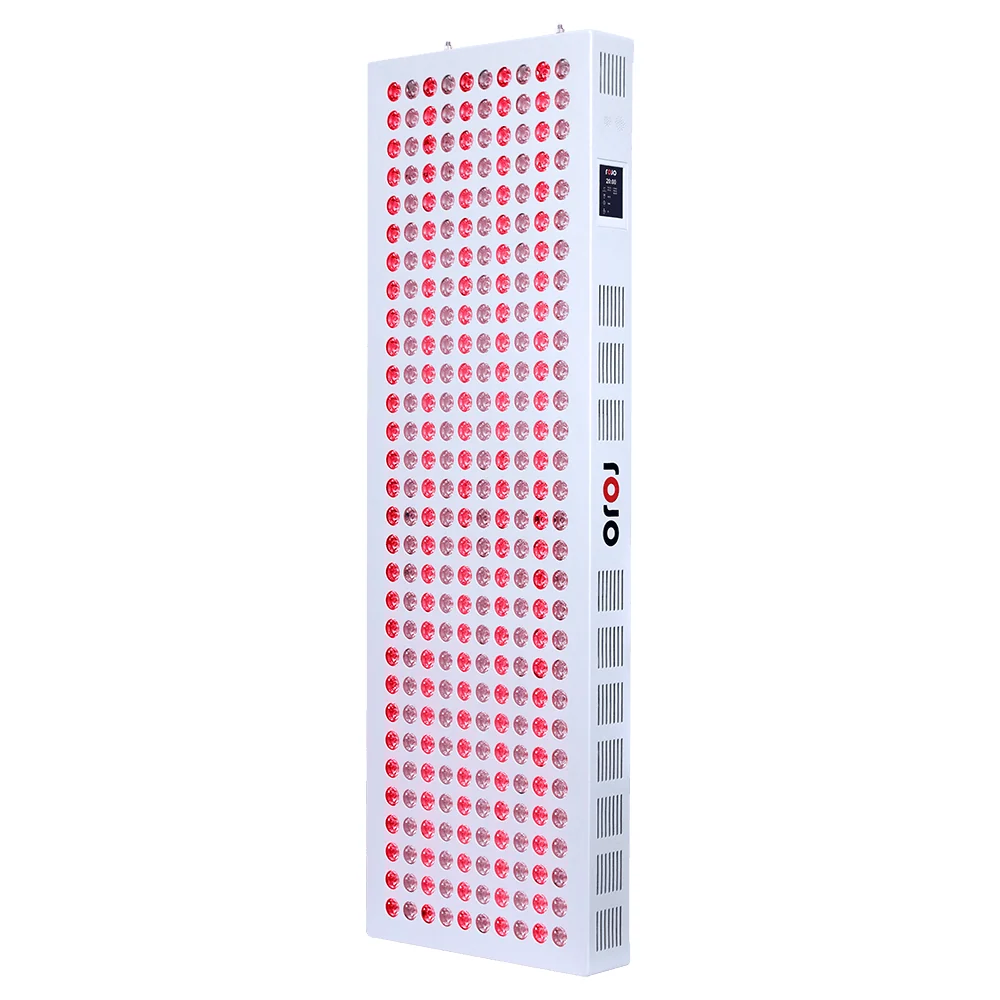 | Rojo Refine 900 | verify | LTI #3, 88/100; app control, presets LTI-reported | verify | verify | — | verify | verify |
| 4 | 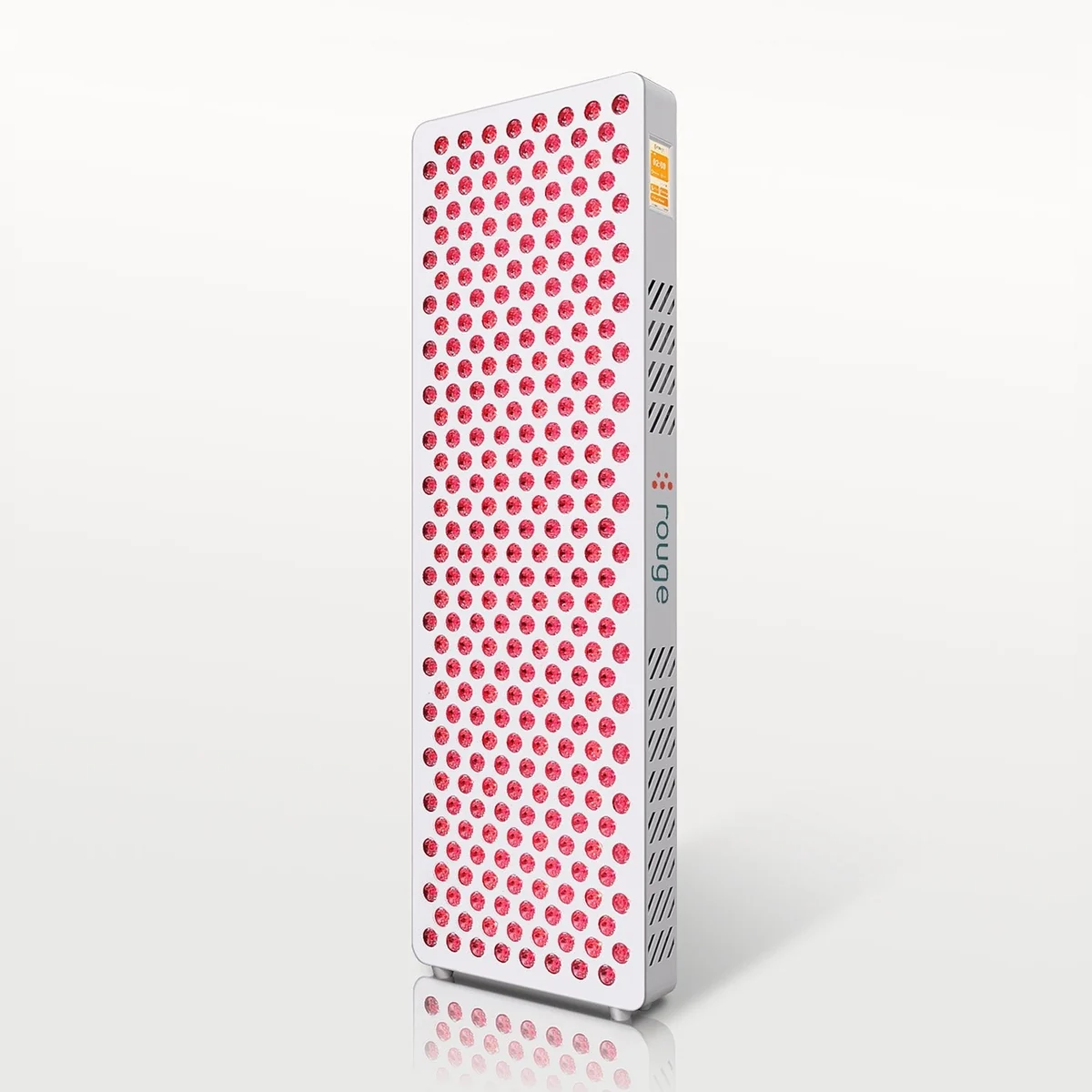 | Rouge Care Pro G3 photo: Pro G4 | Half-body catalog | LTI #4 LTI-reported | 660, 850 catalog | ~75 mW/cm² catalog est. | ~6.7 (if est. holds) | 3 yr catalog | verify |
| 5 | 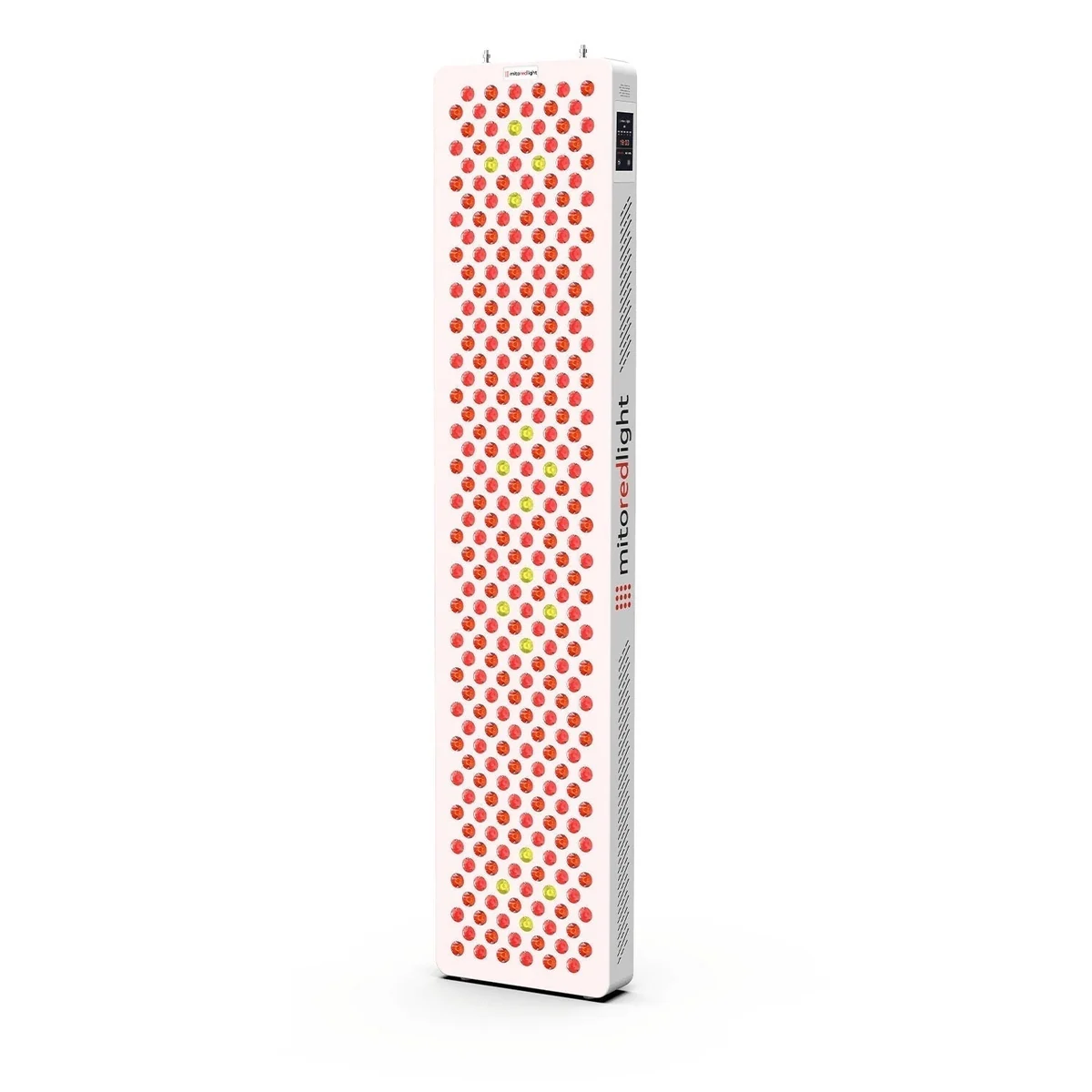 | Mito Red Light MitoPRO X 1500 | Full-body catalog | LTI #5, 83.5/100; 6 wavelengths, touchscreen LTI-reported | 480, 630, 660, 810, 830, 850 catalog | ~72 mW/cm² catalog est. | ~6.9 (if est. holds) | 3 yr catalog | verify |
| 6 | 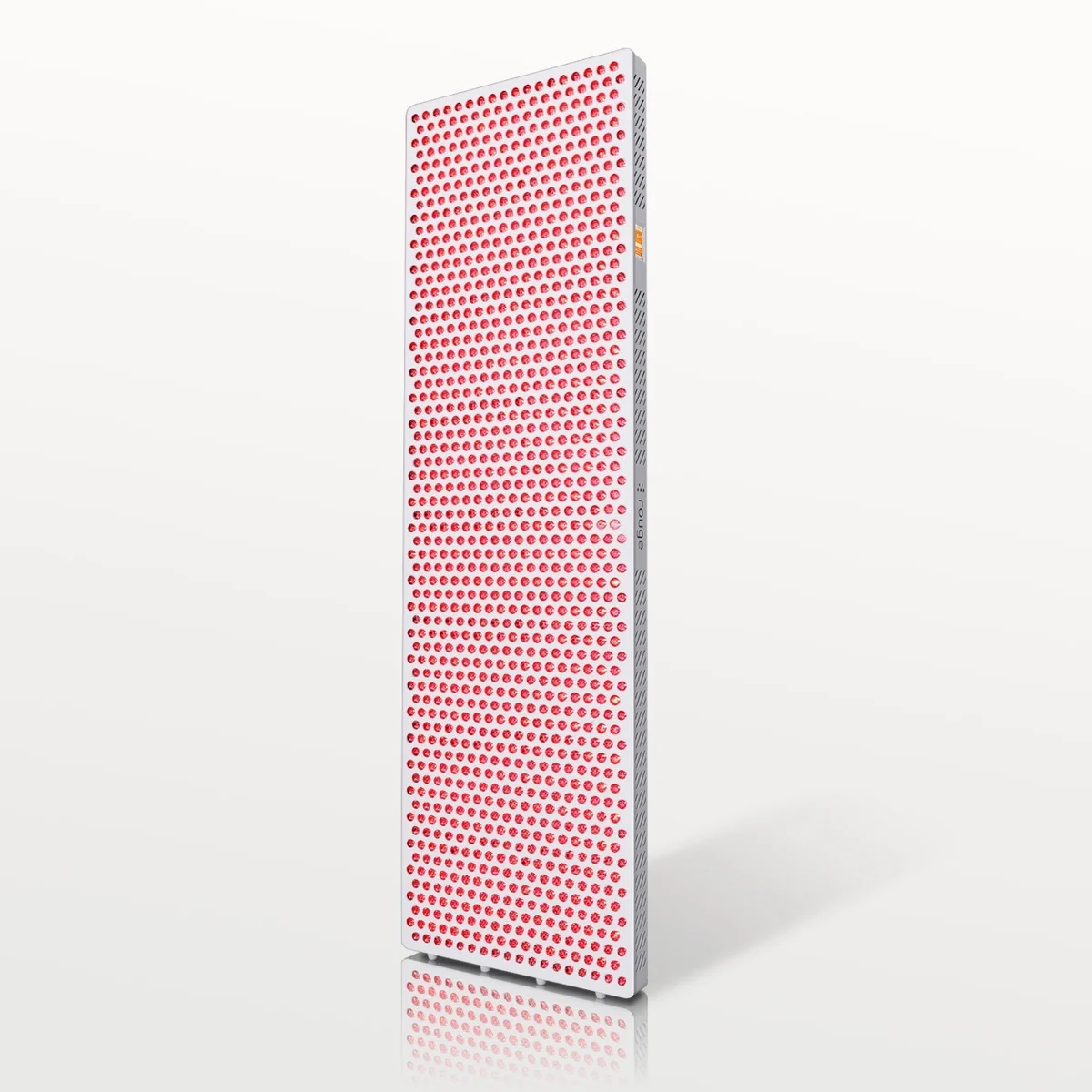 | Rouge G4 Ultimate | Full-body | LTI's top full-body pick for 2026; “extra wavelengths” LTI-reported | 630, 660, 810, 830, 850 catalog | ~82 mW/cm² catalog est. | ~6.1 (if est. holds) | 3 yr catalog | verify |
| 7 | 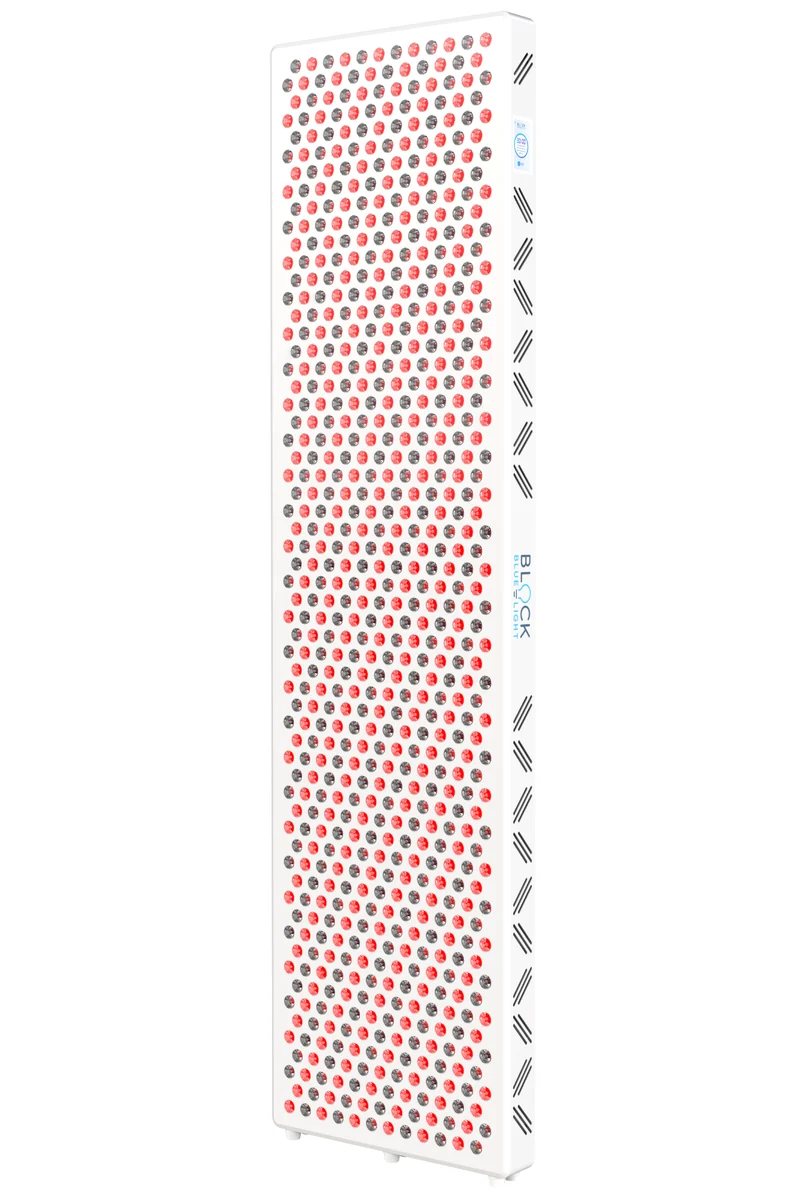 | Block Blue Light Elite XL | Full-body | LTI full-body runner-up; 720 LEDs LTI-reported | 630, 660, 810, 830, 850 catalog | ~77 mW/cm² LTI-reported | ~6.5 | 3 yr catalog | $3,500 list (LTI) vs $1,099 (catalog) → ~$45 vs ~$14 conflict |
| 8 | 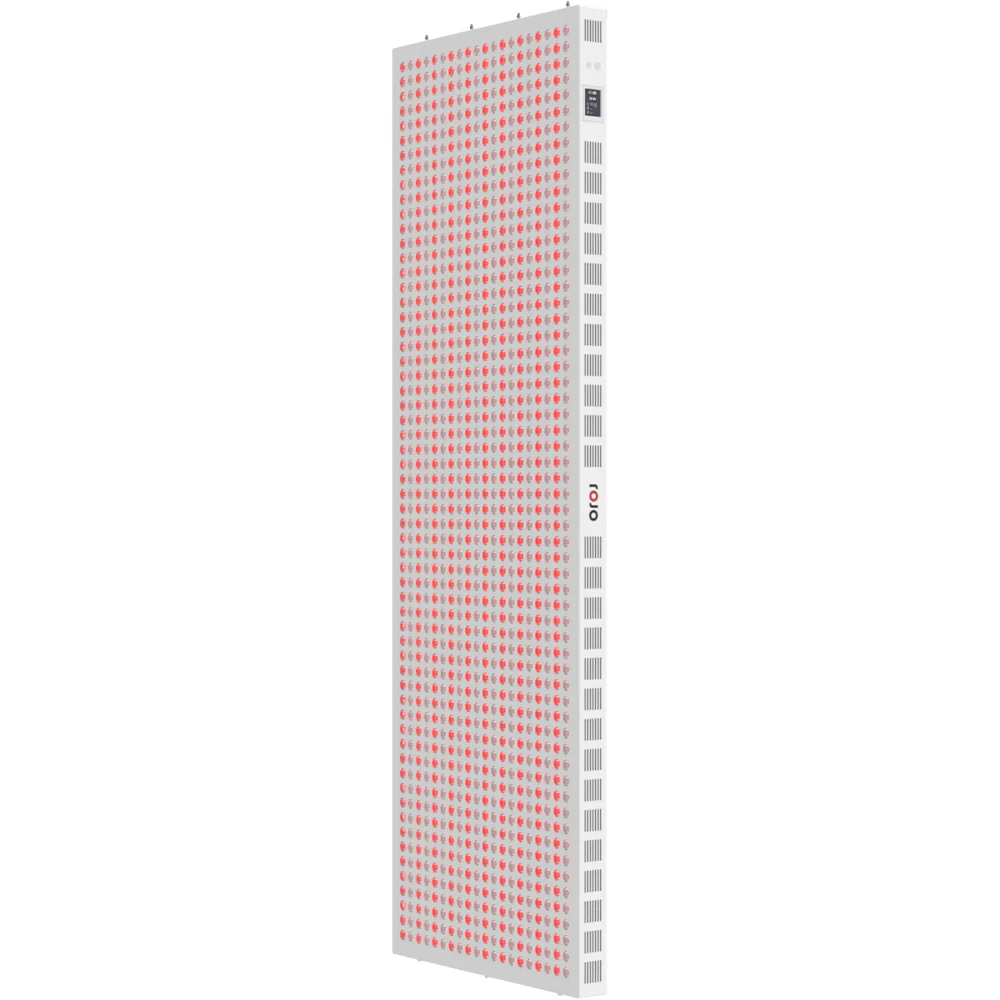 | Rojo Refine 3600 | Full-body (172 × 54 cm) | LTI premium full-body pick; 1,200 LEDs LTI-reported | 5 bands verify which | 72 mW/cm² LTI-reported | ~6.9 | verify | $3,700 list (LTI) → ~$51 |
| 9 | 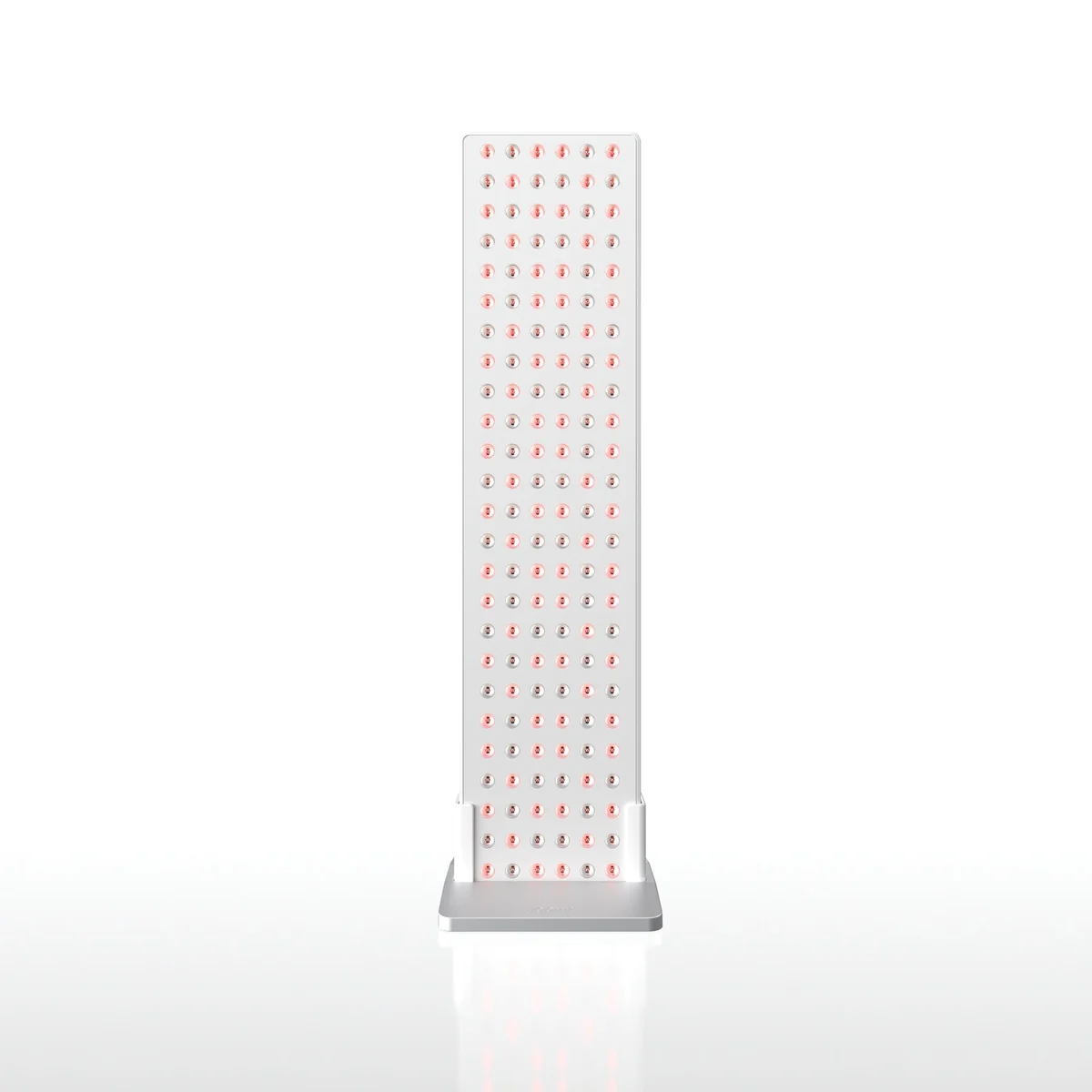 | Joovv Solo 3.0 | Half-body | LTI scored Joovv 40.5/100, “overpriced for output” LTI-reported | 660, 850 catalog | ~70 catalog est. to “~100+” (no distance stated) | ~5–7.1 | 2 vs 3 yr conflict | $1,295 catalog → ~$13–19 |
| 10 | 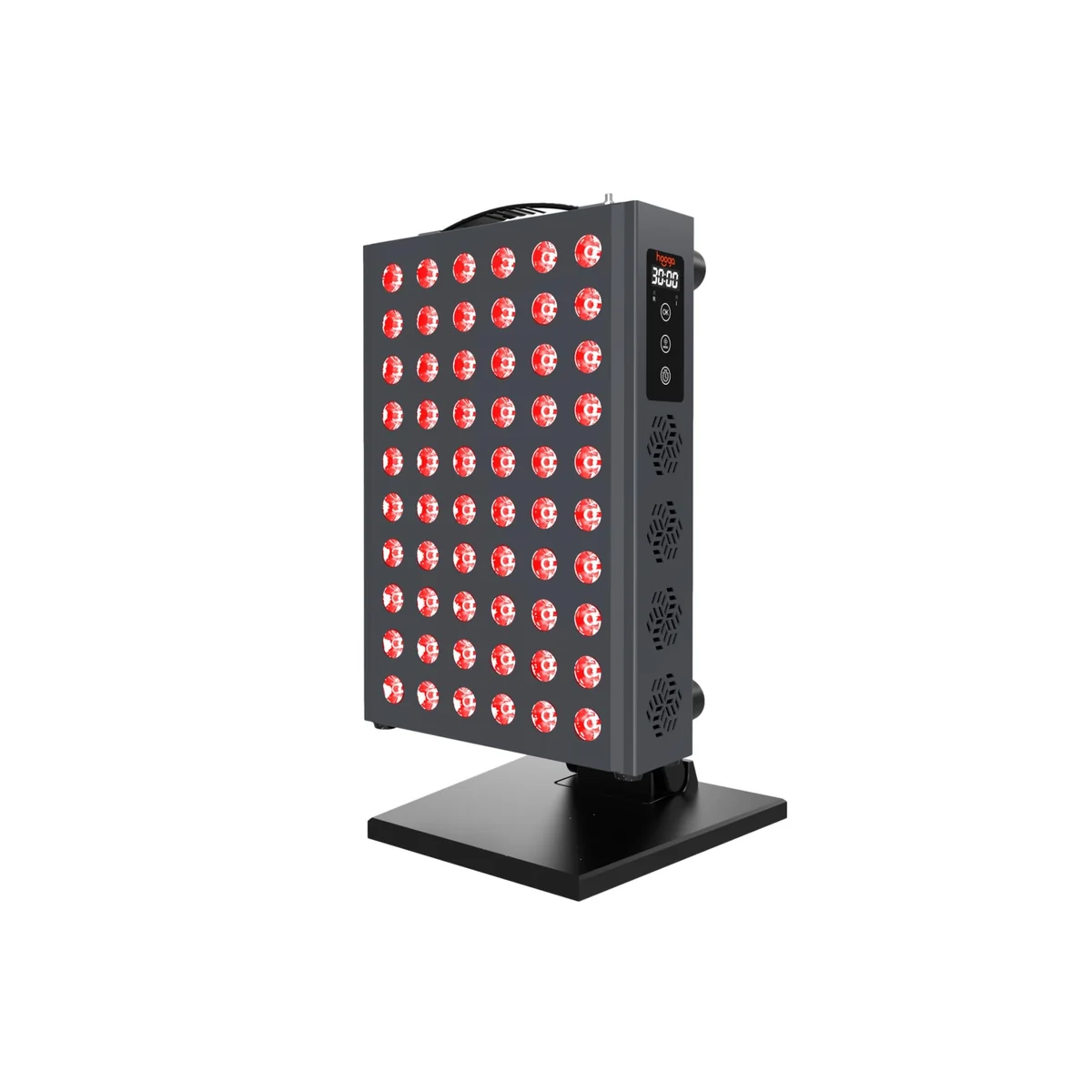 | Hooga HGPRO 300 | Tabletop / small | Not scored in our notes; budget four-band line | 630, 660, 830, 850 catalog | ~65 mW/cm² catalog est. | ~7.7 (if est. holds) | 2 yr catalog | $399 catalog → ~$6 |
How to read this table
- Measured beats claimed. Only rows marked LTI-reported carry a third-party measurement. Catalog estimates are placeholders until we re-check each brand's own irradiance-at-distance chart.
- The minutes column is the real-world difference. Between about 65 and 90 mW/cm², the time to a given dose changes by only a couple of minutes. Coverage, warranty and build matter as much as a few mW.
- Full-body vs half-body is about how much of you is lit per session, not about stronger light. Rows 5–8 cost more mainly for size.
Brand notes
Context on the brands above, from our notes. This is not a ranking by Red Light Guide.
- PlatinumLED BIOMAX (300, 450, 600, 900, 1200) and BIO line. Ranked first in Light Therapy Insiders' 2024 wall-panel comparison (BIOMAX 900, 93.5/100). Our notes conflict on the BIOMAX 900's price, LED count and wavelengths; see the box below.
- Block Blue Light Mega 4.0 and Elite XL. LTI ranked the Mega 4.0 second (91/100) and listed both at about 77 mW/cm². The Elite XL price conflicts between our sources.
- Rojo Therapy Refine 900 and 3600. LTI ranked the Refine 900 third (88/100) and reported 72 mW/cm² for the 3600. Not in our catalog, so specs are thin.
- Rouge Care (Tabletop, Panel, Pro, Ultimate G3; G4 Ultimate). LTI ranked the Pro G3 fourth and named the G4 Ultimate its 2026 full-body pick. Rouge is not RedRush. One of our research files lumps “Rouge/RedRush” together, but they're separate brands with separate product lines. Check which one a review is talking about.
- Mito Red Light (MitoPRO 300/750/1500, MitoPRO X, MitoMID/MAX/RED 2.0). LTI placed the MitoPRO X 1500 fifth (83.5/100). Our notes disagree on model names (“300+” vs “300”), so check the current line.
- Hooga (HG200–HG1500, HGPRO) and Joovv (Mini to Elite 3.0): a budget two-band line and a premium modular one (see the Joovv section). Bestqool and GembaRed are named in our notes without reliable specs.
Sources disagree: PlatinumLED BIOMAX 900. Our files give three prices ($1,299 in third-party reviewer notes, $1,499 in an internal catalog, $1,995 in a research database). They give two LED descriptions (300 dual-chip LEDs vs “900 LEDs”). They give 6 wavelengths in one place and 7 (adding about 480 and 1060 nm) in others. Irradiance is 90 mW/cm² in LTI's notes and “~100–150 mW/cm²” in our research overview. Some may be different generations or sale prices. We can't tell which is current. Verify on PlatinumLED's own site before comparing it with anything.
Red flags when shopping for a panel
- “1000W” but no mW/cm² at a stated distance, or irradiance from a solar meter or at the panel surface.
- Many wavelengths, no per-band output; “zero EMF” with no method.
- “FDA-approved” wording, cure-all claims, under 2 years of warranty or no clear returns.
Safety first
Eyes: panels are far brighter than masks. Our notes advise protective eyewear with devices above about 100 mW/cm², and near-infrared is invisible. Don't stare into the LEDs. Wait until healed after eye surgery or an eye injury.
Talk to a clinician first if you:
- have or have had cancer (never shine light over a known or suspected tumour)
- are pregnant (avoid the abdomen and lower back)
- take light-sensitising medicines: tetracyclines, retinoids, some antipsychotics, lithium, some NSAIDs, St John's wort
- have porphyria, lupus or another light-sensitive condition
- have light-triggered seizures (avoid pulsed modes)
- have a thyroid condition (avoid the front of the neck unless your doctor agrees)
Mild warmth is normal. If you feel worse after sessions, or early benefits fade, you may be overdoing it: cut time by about half and build back slowly.
Where to buy
We'll add vetted links once we've confirmed current pricing and partner terms. For now, check the brand's own site, confirm the current model generation, measured irradiance at 6 inches, warranty and return window, and buy from the brand or an authorised retailer in your country.
Get the free Dosing Cheat Sheet
One printable page: the dose formula, skin vs deep bands, the distance rule and the “too much” warning signs. Plus a short, occasional email with one practical tip. No spam.
By signing up you agree we email you the cheat sheet and occasional Red Light Guide tips. Double opt-in — confirm the email we send. Unsubscribe anytime. You can also read the cheat sheet online. Educational only, not medical advice.FAQ
What is the best red light therapy panel?
There isn't one best panel for everyone. Shortlist panels that publish irradiance (mW/cm²) at a stated distance, ideally 6 inches, from an independent measurement; use red (about 630–660 nm) plus near-infrared (about 810–850 nm); are big enough for the area you want to treat; and come with at least a 2-year warranty and a real return window. Then compare price per usable mW/cm² within the same size class. A widely followed third-party reviewer (Light Therapy Insiders) ranked PlatinumLED BIOMAX 900 first in its 2024 wall-panel comparison. That is their ranking, not ours; we have not tested panels.
Does a 1000W red light panel mean 1000 watts of light?
Almost never. Wattage on a box usually describes electrical input, and on many budget panels it is a nominal figure (number of LEDs × the LED's rated wattage) rather than what the panel actually draws from the wall. Only part of the electricity becomes light; the rest is heat. What matters for your dose is irradiance at your skin, in mW/cm², at a stated distance.
How far should I stand from a red light panel?
Most brands quote irradiance at about 15 cm (6 in). Standing further back covers more of your body but lowers the power reaching you, roughly to a quarter at double the distance for a small source. Pick a distance, use the brand's irradiance-at-distance chart if it has one, and set your time with the dose formula.
How long should a red light panel session be?
Use the dose formula: time (seconds) = target dose (J/cm²) × 1,000 ÷ irradiance at your distance (mW/cm²). Third-party notes suggest roughly 3–5 minutes for skin goals and 10–15 minutes for deeper tissue on a panel delivering about 100 mW/cm². Start lower and follow the maker's manual.
Do I need goggles with a red light panel?
With bright panels, yes. Our research notes advise protective eyewear with devices above about 100 mW/cm², and near-infrared is invisible, so your eyes won't warn you. Don't stare into the LEDs.
Is an FDA Class II panel FDA-approved?
No. A device class describes the regulatory category, not approval. Some panels are FDA-cleared through 510(k) for a specific indication, which is narrower still. Look up the exact model in the FDA 510(k) database before relying on any clearance claim.
Sources
This page is a second-hand synthesis. Rankings, scores and irradiance figures marked “LTI-reported” come from Light Therapy Insiders (Alex Fergus) via our research notes (2024–2025 rankings, captured about January 2026). Other prices, LED counts, warranties and size classes come from internal research files of a similar age, which disagree in places; we've flagged each conflict. The $-per-mW/cm² figures are our arithmetic on those numbers. We have not run device, spectrometer, EMF or flicker tests of our own.
- Light Therapy Insiders (Alex Fergus): panel rankings and scores, irradiance figures, solar-meter caveat, 70–100 mW/cm² benchmark, EMF and warranty guidance (via our notes, not re-verified line by line).
- Huang Y-Y, Chen AC-H, Carroll JD, Hamblin MR. Biphasic Dose Response in Low Level Light Therapy. Dose-Response, 2009 (PMC): why more power or time isn't automatically better.
- FDA 510(k) Premarket Notification database: where to check a specific panel's clearance and indication.
- Red Light Guide research notes: RLT comprehensive overview, research database and an older device catalog (internal compilations) for device types, wavelengths, warranties, flicker and contraindications.